
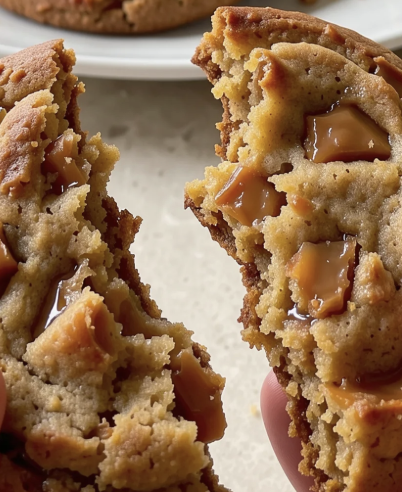
Brown Butter Toffee Cookies – Thick, Chewy & Delicious! 🍪🤎
Brown Butter Toffee Cookies are thick bakery-style cookies made with nutty browned butter, brown sugar, granulated sugar, crunchy toffee bits, semisweet chocolate chunks, and optional flaky sea salt. They bake with crisp golden edges and soft, chewy centers, making them ideal when you want a rich homemade cookie with a more intense butter flavor than a standard chocolate chip cookie.
The brown butter is the defining technique.
Instead of simply softening butter, you melt it and continue cooking until the milk solids turn golden brown and develop a toasted, nutty aroma.
That browned butter is then cooled and mixed with sugar, eggs, vanilla, flour, cornstarch, baking soda, toffee, and chocolate.
The dough is chilled for at least one to two hours, then shaped into large quarter-cup portions so the finished cookies have a substantial bakery-style appearance.
Why You’ll Love These Brown Butter Toffee Cookies
These cookies combine several dessert flavors in one recipe.
Brown butter provides a deep toasted flavor.
Toffee adds caramel-like crunch.
Chocolate chunks melt into rich pockets.
Brown sugar contributes chewiness and depth.
Optional flaky salt adds contrast.
You’ll love these cookies because they are:
- Thick and bakery-style
- Rich with brown butter
- Packed with toffee
- Filled with chocolate chunks
- Chewy in the middle
- Crisp around the edges
- Large enough for an impressive presentation
- Freezer-friendly
- Great for gifting
- Easy to customize
They are particularly good when you want a cookie that feels more special than a basic chocolate chip recipe without requiring frosting or decoration.
Brown Butter Toffee Cookies Ingredients
You’ll need:
- 1 cup (2 sticks) unsalted butter
- 1 cup packed brown sugar
- 1/2 cup granulated sugar
- 2 large eggs
- 2 teaspoons vanilla extract
- 2 1/2 cups all-purpose flour
- 1 teaspoon baking soda
- 1 teaspoon cornstarch
- 1/2 teaspoon salt
- 1 cup toffee bits
- 3/4 cup semisweet chocolate chunks
- Flaky sea salt, optional
Understanding the Main Ingredients
Unsalted Butter
Butter is transformed before it goes into the dough.
Browning it cooks the milk solids until they develop toasted color and aroma.
That creates a deeper flavor than plain melted butter.
Brown Sugar
Brown sugar contributes moisture, sweetness, and a deeper caramel-like flavor.
It works especially well with brown butter and toffee.
Granulated Sugar
Granulated sugar contributes sweetness and helps the cookie edges become crisp.
The combination of brown and white sugar gives a balance of chewiness and structure.
Eggs
Two eggs bind the dough and contribute moisture and richness.
Vanilla
Two teaspoons of vanilla support the brown butter, chocolate, and toffee flavors.
Flour
All-purpose flour forms the main structure of the cookie.
Because this recipe creates large cookies, correct flour measurement is especially important.
Baking Soda
Baking soda provides leavening and contributes to browning and spread.
Cornstarch
Cornstarch can help produce a softer, thicker cookie texture.
Only a small amount is needed.
Toffee Bits
Toffee bits provide caramelized sweetness and small crunchy pieces throughout the cookie.
Semisweet Chocolate Chunks
Chocolate chunks create larger melted pockets than small chips.
Semisweet chocolate also provides some bitterness to balance the sweet toffee.
Flaky Sea Salt
This is optional.
A small amount on the finished cookies can create a sweet-salty contrast.
How to Brown Butter
Brown butter sounds advanced, but the technique is straightforward when you watch it closely.
Step 1: Melt the Butter
Place one cup of unsalted butter in a saucepan over medium heat.
Allow it to melt completely.
Step 2: Keep Cooking
Once melted, continue heating.
The butter will foam and bubble as water evaporates.
Stir or swirl as needed so the milk solids cook evenly.
Step 3: Watch the Color
After several minutes, the milk solids at the bottom will begin turning golden.
The aroma should become nutty and toasted.
Step 4: Remove Promptly
Once you see golden-brown solids and smell a nutty aroma, remove the pan from the heat.
Brown butter can move from golden to burnt relatively quickly, so don’t walk away.
Step 5: Transfer to a Bowl
Pour the brown butter into a heat-safe mixing bowl.
Include the browned milk solids because they contain much of the flavor.
Let the butter cool until it is no longer hot.
Why Brown Butter Makes Cookies Taste Different
Regular butter contains milk solids, water, and fat.
When butter is browned, the milk solids toast.
That creates a deeper, nuttier flavor.
The result can taste more complex than ordinary melted butter.
Brown butter works especially well with:
- Brown sugar
- Toffee
- Chocolate
- Vanilla
- Nuts
- Caramel flavors
- Sea salt
This is why it is such a good foundation for a bakery-style cookie.
How to Make Brown Butter Toffee Cookies
Step 1: Brown the Butter
Melt the unsalted butter in a saucepan.
Continue cooking and stirring until the milk solids turn golden brown and the butter smells nutty.
Transfer it immediately to a heat-safe bowl.
Allow it to cool until no longer hot.
Step 2: Mix Brown Butter and Sugars
Add:
- 1 cup packed brown sugar
- 1/2 cup granulated sugar
Beat or stir until thoroughly combined with the cooled brown butter.
The texture will differ from traditional creamed butter and sugar because the butter was melted first.
Step 3: Add Eggs and Vanilla
Mix in:
- 2 large eggs
- 2 teaspoons vanilla extract
Beat until smooth and cohesive.
Step 4: Add Dry Ingredients
Add:
- 2 1/2 cups all-purpose flour
- 1 teaspoon baking soda
- 1 teaspoon cornstarch
- 1/2 teaspoon salt
Stir just until a thick cookie dough forms.
Avoid prolonged mixing once the flour disappears.
Step 5: Fold in Toffee and Chocolate
Add:
- 1 cup toffee bits
- 3/4 cup semisweet chocolate chunks
Fold until the mix-ins are distributed throughout the dough.
Try to avoid leaving one section of dough overloaded while another has very little.
Step 6: Chill the Dough
Cover the dough and refrigerate for at least 1–2 hours.
This is especially important because the recipe starts with melted brown butter.
Chilling firms the fat and helps reduce excessive spreading.
Step 7: Preheat the Oven
Preheat the oven to 350°F (175°C).
Line baking sheets with parchment paper.
Step 8: Shape Giant Cookies
Scoop approximately 1/4 cup of dough per cookie.
Shape each portion into a tall mound rather than flattening it.
This helps create a thick bakery-style profile.
Step 9: Space Them Well
Arrange the dough portions about 3 inches apart.
Large cookies need more space than standard tablespoon-sized cookies.
Step 10: Bake
Bake for approximately 13–17 minutes.
Look for golden edges and centers that are just set.
The exact time can vary depending on cookie size, oven behavior, and baking sheet.
Step 11: Add Flaky Salt
If using flaky sea salt, sprinkle a small amount over the warm cookies.
Step 12: Cool on the Baking Sheet
Let the cookies cool on the baking sheet for approximately 10 minutes.
Large cookies are delicate when hot.
This resting time allows the centers to set further before transfer.
Why Chill Brown Butter Cookie Dough?
Chilling is critical in this recipe because the butter has been melted.
Even after brown butter cools, the dough can be softer than dough made with creamed solid butter.
Refrigeration firms the fat.
That helps the cookies spread more slowly when they enter the oven.
Chilling also:
- Makes the dough easier to scoop
- Helps keep giant cookies thick
- Allows the flour to hydrate
- Makes shaping tall mounds easier
- Helps reduce overly thin edges
The recipe recommends at least one to two hours.
If the dough is still extremely soft after one hour, additional chilling may help.
How to Make Giant Bakery-Style Cookies
Large cookies require a slightly different approach than small cookies.
First, use consistent portions.
A quarter-cup scoop helps keep the cookies similar in size.
Second, shape the dough upward.
Tall mounds tend to produce a thicker center than flattened disks.
Third, give them space.
Three inches between cookies reduces the chance of them merging during baking.
Fourth, don’t overbake.
Large cookies continue setting on the baking sheet after they leave the oven.
Removing them when the centers are just set helps preserve chewiness.
Why Cornstarch Helps
Cornstarch is used in a small amount.
It can soften the flour structure and contribute to a tender, thick texture.
This is one reason cornstarch appears in many bakery-style cookie recipes.
It doesn’t replace flour.
Instead, it works alongside the flour.
Because only one teaspoon is used, avoid adding substantially more unless the recipe is being specifically tested for that change.
Tips for Thick Brown Butter Toffee Cookies
Don’t Burn the Butter
Brown butter should smell nutty and look golden-brown, not black.
Cool the Brown Butter
Don’t add very hot butter directly to the eggs.
Let it cool first.
Measure Flour Carefully
Too little flour can encourage excessive spreading.
Too much can make the cookies dry.
Chill the Dough
This is one of the most important steps.
Make Tall Mounds
Don’t flatten the quarter-cup portions before baking.
Give Them Space
Large cookies spread more than small ones.
Don’t Overbake
Look for golden edges and just-set centers.
Rest Them on the Pan
Ten minutes of cooling on the baking sheet helps the centers finish setting.
Common Mistakes to Avoid
Burning the Brown Butter
Brown butter changes quickly near the end.
Remove it once the solids are golden and fragrant.
Using Hot Brown Butter
Extremely hot butter can affect the dough and eggs.
Cool it first.
Skipping the Chill
Warm dough can spread dramatically.
Making Small Cookies Without Adjusting Time
This recipe is designed around giant quarter-cup portions.
Smaller cookies would likely require less baking time.
Flattening the Dough
Tall portions help promote thickness.
Overcrowding the Pan
Three inches of spacing is recommended.
Overbaking
If the center is already completely firm in the oven, the cookie may become drier as it cools.
Easy Brown Butter Toffee Cookie Variations
Add Pecans
Chopped pecans complement brown butter and toffee beautifully.
If you add them, keep the total mix-in quantity manageable.
Add Walnuts
Walnuts provide a slightly more bitter nut flavor that balances sweetness.
Use Dark Chocolate
Dark chocolate can create more contrast with the sweet toffee.
Use Milk Chocolate
Milk chocolate creates a sweeter version.
Add Espresso Powder
A small amount can deepen the chocolate flavor without turning the cookies into coffee cookies.
Add Extra Flaky Salt
Use sparingly.
The goal is contrast, not a salty cookie.
Brown Butter Toffee Cookies for Holiday Baking
These cookies work especially well for Christmas and holiday gift boxes because their large size makes them look impressive without decoration.
Pair them with smaller cookies for variety.
Good combinations include:
- Lemon Crinkle Cookies
- Pecan Praline Cookies
- Sugar cookies
- Ginger cookies
- Shortbread
- Chocolate crinkles
The different colors and textures create a better-looking cookie tray.
How to Store Brown Butter Toffee Cookies
Allow the baked cookies to cool completely.
Store them in an airtight container at room temperature for up to 5 days, according to the original recipe.
Because these cookies are large, separate layers with parchment if necessary.
Keeping the container sealed helps reduce drying.
How to Freeze Brown Butter Toffee Cookies
The original recipe allows freezing either:
- Baked cookies
- Unbaked cookie dough
up to 3 months for best quality.
For baked cookies, cool them fully before freezing.
For dough, portioning it before freezing can make later baking more convenient.
Remember that frozen dough may need additional handling or adjusted baking time depending on whether you thaw it first.
Brown Butter Toffee Cookies FAQs
What are Brown Butter Toffee Cookies?
Brown Butter Toffee Cookies are large bakery-style cookies made with browned butter, brown sugar, toffee bits, and chocolate chunks.
They have crisp edges and chewy centers.
Why brown the butter?
Browning toasts the milk solids in butter and creates a deeper nutty flavor.
How do I know when butter is browned?
Look for golden-brown milk solids at the bottom of the pan and a distinctly nutty aroma.
Why do I need to cool the brown butter?
Very hot butter can affect other ingredients and create an overly warm dough.
Why do I need to chill the dough?
The recipe starts with melted butter, so chilling firms the fat and helps reduce excessive spreading.
Why are my cookies spreading too much?
Possible causes include warm dough, insufficient chilling, inaccurate flour measurement, or flattening the dough before baking.
How big should the cookies be?
The recipe uses approximately 1/4 cup of dough per cookie.
How do I keep them thick?
Chill the dough, shape tall mounds, and avoid flattening before baking.
Can I freeze the dough?
Yes. The original recipe recommends freezing unbaked dough for up to three months for best quality.
How long do the baked cookies keep?
The recipe recommends up to 5 days in an airtight container at room temperature.
Conclusion
Brown Butter Toffee Cookies combine nutty browned butter, brown sugar, crunchy toffee, semisweet chocolate, and chewy bakery-style centers in one rich homemade cookie.
The most important techniques are browning the butter carefully, letting it cool, chilling the finished dough for one to two hours, and shaping large quarter-cup portions into tall mounds.
Bake until the edges are golden and the centers are just set, then let the cookies rest on the baking sheet for ten minutes.
Finish with flaky sea salt if desired.
The result is a thick, chewy Brown Butter Toffee Cookie with crisp edges, melted chocolate, caramel-like toffee, and deep butter flavor.