
Introduction
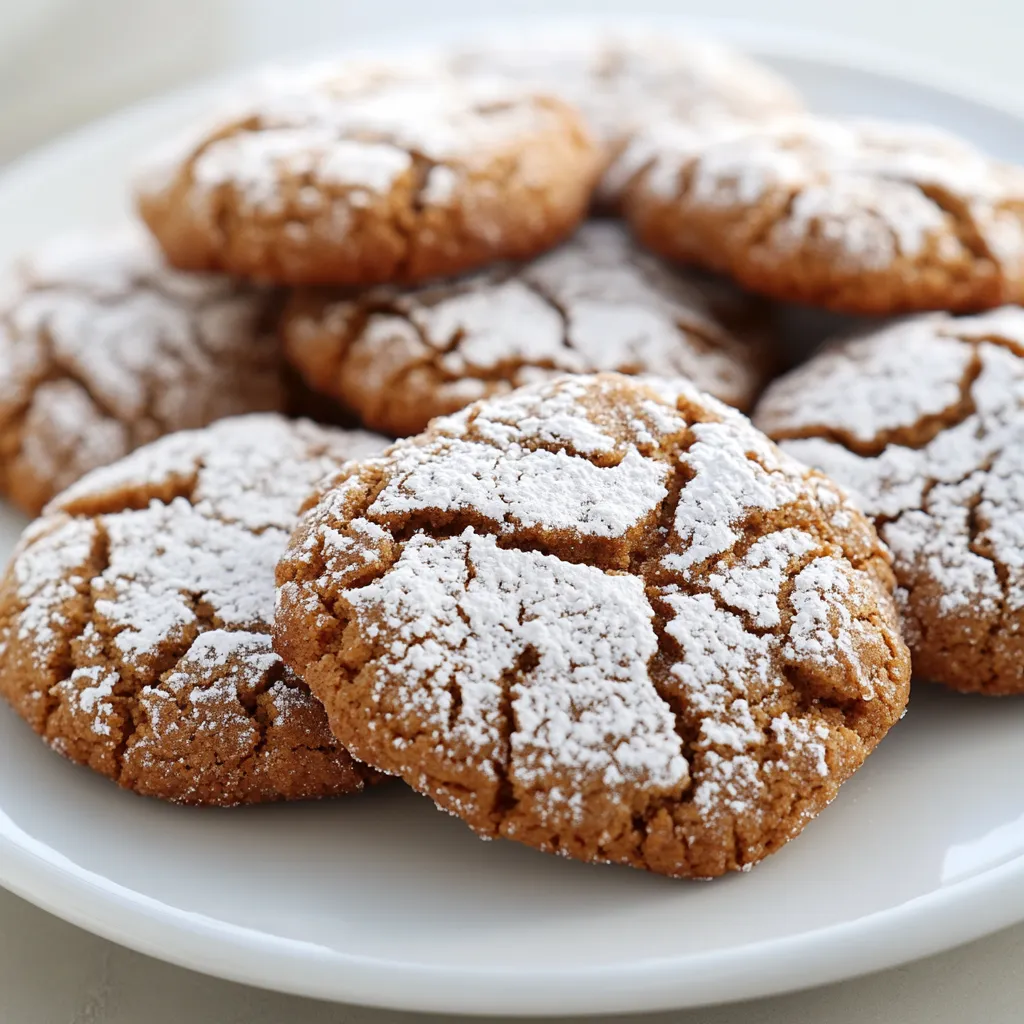
Gingerbread Crinkle Cookies are the quintessential holiday treat, enchanting us with their rich aromas and delightful textures. The combination of warm spices such as ginger, cinnamon, nutmeg, and cloves creates a memorable flavor profile, perfectly complemented by the buttery softness of the cookie itself. The generous dusting of powdered sugar lends a festive snowy appearance, making these cookies not only delicious but visually appealing as well.
With their comforting, sweet profile, Gingerbread Crinkle Cookies are an ideal way to spread holiday cheer during gatherings, parties, or simply cozy evenings at home. Whether paired with a hot cup of cocoa or served as part of a dessert platter, these cookies will surely bring smiles and warmth to your celebrations. This guide will equip you with all the tips and techniques needed to craft these memorable cookies, ensuring they turn out perfectly each time.
Recipe Overview
– Prep Time: 30 minutes
– Cook Time: 12 minutes
– Total Time: 1 hour
– Course: Dessert
– Cuisine: American
– Servings: 24 cookies
– Calories: ~150 per cookie
Ingredients
– 2 cups all-purpose flour
– 1 tablespoon ground ginger
– 1 tablespoon ground cinnamon
– 1/2 teaspoon ground nutmeg
– 1/4 teaspoon ground cloves
– 1/2 teaspoon baking soda
– 1/2 teaspoon salt
– 1/2 cup unsalted butter, softened to room temperature
– 1 cup packed brown sugar
– 1/4 cup unsulfured molasses
– 1 large egg
– 1 teaspoon pure vanilla extract
– 1/2 cup powdered sugar, for rolling
{{image_ing_2}}
Instructions
1. Begin by preheating your oven to 350°F (175°C). Prepare a baking sheet by lining it with parchment paper to prevent sticking.
2. In a medium mixing bowl, combine the all-purpose flour, ground ginger, ground cinnamon, ground nutmeg, ground cloves, baking soda, and salt. Whisk these dry ingredients together until they are well blended.
3. In a separate large mixing bowl, cream the softened unsalted butter and packed brown sugar together using a hand mixer or stand mixer. Beat the mixture until it becomes light and fluffy, which should take about 2-3 minutes.
4. Add the unsulfured molasses, large egg, and pure vanilla extract to the butter-sugar mixture. Beat everything together until the ingredients are fully incorporated and the mixture is smooth.
5. Gradually add the bowl of dry ingredients to the wet mixture, stirring gently until just combined. Be cautious not to overmix, as this can affect the texture of the cookies.
6. Cover the dough with plastic wrap and chill it in the refrigerator for approximately 30 minutes. This step will help firm up the dough, making it easier to handle.
7. After chilling, use a tablespoon to scoop out portions of the dough and roll them into balls between your palms.
8. Roll each dough ball in powdered sugar until completely coated, creating a snowy finish.
9. Arrange the coated dough balls on the prepared baking sheet, ensuring they are spaced about 2 inches apart to allow for spreading during baking.
10. Bake the cookies in the preheated oven for 10-12 minutes. The edges should be set while the centers remain soft and slightly underbaked for a chewy texture.
11. Allow the cookies to cool on the baking sheet for a few minutes before transferring them to a wire rack. Let them cool completely.
Presentation Tips
Serve the cookies on a festive platter lined with parchment paper. For an extra touch, dust with additional powdered sugar just before serving, or place a small sprig of rosemary or a cinnamon stick next to the cookies for a beautiful holiday presentation.
The Importance of Each Ingredient
All-Purpose Flour
The backbone of any cookie, all-purpose flour is critical for providing structure. It helps bind ingredients together, giving cookies their desired shape and texture. The gluten formed during mixing gives the cookies a delightful bite, making them sturdy enough to hold up the rich flavors of the spices without becoming dense or heavy.
Spices: Ginger, Cinnamon, Nutmeg, Cloves
Each spice works harmoniously to create a complex flavor profile. Ground ginger adds a peppery heat that is characteristic of gingerbread. Ground cinnamon introduces warmth and sweetness, while ground nutmeg lends a lovely aromatic quality. Finally, ground cloves infuse an additional layer of earthiness that rounds out the cookie’s flavors beautifully, each bringing their unique qualities that make these cookies truly special.
Unsalted Butter
Using unsalted butter, softened to room temperature, is key for achieving a light and fluffy texture. When properly creamed with sugar, it creates tiny air pockets that expand during baking, resulting in a tender cookie. The temperature is important because butter that is too hard won’t blend well, while melted butter can lead to greasy cookies.
Brown Sugar vs. White Sugar
Brown sugar plays a pivotal role in the cookie-making process. It’s moist and contributes to the rich depth of flavor thanks to the molasses content. This moisture also helps keep the cookies chewy and tender, in contrast to white sugar, which can dry out baked goods and lead to a crisper texture. By using brown sugar, these cookies benefit from enhanced flavor and a wonderfully soft bite.
Equipment Needed
Mixing Bowls
Different sizes of mixing bowls will serve you well during the preparation process. A large mixture is essential for creaming the butter and sugar, while a smaller bowl is perfect for whisking together the dry ingredients. Having the right bowl sizes will keep your workspace organized and efficient.
Hand Mixer or Stand Mixer
A hand mixer or stand mixer is invaluable when it comes to achieving the right texture with your butter and sugar mixture. Mixing tools enhance air incorporation, resulting in the desired lightness that defines baked goods. A stand mixer, particularly, allows for hands-free operation, which can be a blessing when you’re tackling multiple batches during busy baking sessions.
Baking Sheet and Parchment Paper
Using parchment paper on your baking sheet is a game-changer, providing a non-stick surface that facilitates easy removal of cookies once baked. Parchment paper also contributes to even baking, preventing the bottoms of cookies from becoming too brown while keeping clean-up straightforward.
Wire Rack
A wire rack is essential for cooling your cookies evenly. This allows air to circulate around them, helping to maintain their texture while they cool. Transferring cookies directly to a countertop means they may retain steam, causing them to become soggy rather than retaining that perfectly chewy exterior and soft center.
Step-by-Step Instructions
Preheating the Oven
Preheating your oven to the correct temperature is crucial for successful baking. An accurately heated oven ensures that your cookies bake evenly and rise properly. Starting with a fully preheated oven at 350°F (175°C) creates the perfect environment for these Gingerbread Crinkle Cookies, allowing them to develop their characteristic soft and slightly chewy center without overbaking.
Mixing Dry Ingredients
When it comes to achieving a uniform blend of your dry ingredients, a few techniques can help. Whisking them together thoroughly breaks up any clumps, ensuring that the spices and baking soda are evenly distributed throughout the flour. This step is vital for balanced flavor and proper leavening, as having any concentrated spots of baking soda can lead to uneven rising and taste.
Creaming Butter and Sugar
While creaming together your softened butter and brown sugar, look for a light and fluffy texture. This phase should take about 2-3 minutes; the mixture might change in color and volume as air is whipped in. If you underbeat it, you risk cookies that are dense and flat; overmixing can also lead to problems, so watch closely for the perfect consistency.
Combining Wet and Dry Ingredients
When it’s time to merge the wet and dry ingredients, gentle folding is key. This technique prevents overmixing, which could develop gluten and lead to tougher cookies. The aim is to weave the dry ingredients into the wet until just combined, ensuring that you maintain the tender, chewy texture you desire for the final cookie.
Reasons for Chilling
Chilling the dough is an essential step in the cookie-making process for several reasons. First, it helps to firm up the dough, making it easier to handle and roll into balls. When the dough is cold, it maintains its shape better during baking, which results in cookies that are uniform in size and appearance. Chilling also aids in the development of flavors, as the resting time allows the spices and sugars to meld together more effectively, enhancing the overall taste of the cookies.
Furthermore, the chilling process slows down the melting of the butter when the cookies are introduced to the hot oven, which gives them a chewy texture rather than spreading out too much. Ultimately, chilling is a crucial step that balances the cookie’s structural integrity and flavor profile.
Time Management
To maximize efficiency during the chilling process, consider multitasking. While the dough is chilling in the refrigerator, take the time to prepare your baking sheet and gather the necessary ingredients for rolling and baking. This can include measuring out the powdered sugar for coating and preheating the oven, which you should do around the time you put the cookies in to chill. Additional tasks could include washing any mixing bowls or utensils you have already used, ensuring your workspace is organized and clean by the time you’re ready to roll and bake the cookies. This organized method not only keeps the process smooth but also reduces the overall time from preparation to baking.
Rolling and Coating the Dough
Technique for Rolling
Rolling dough into uniform balls is key to achieving cookies that bake evenly. To ensure a consistent size, use a tablespoon to scoop the cookie dough, which allows for precise measurements. After scooping, gently roll the portion between your palms in a circular motion until it forms a smooth ball. Aim for a diameter of about 1 inch. This technique helps in maintaining even cooking, as larger lumps could lead to uneven baking.
If you encounter any stickiness when rolling the dough, light dusting of flour on your hands can help. However, take care not to incorporate too much additional flour, as this might alter the cookie’s texture.
Coating in Powdered Sugar
Coating the dough balls in powdered sugar offers both aesthetic and taste benefits. Visually, the powdered sugar creates a beautiful snowy finish that enhances the holiday spirit of Gingerbread Crinkle Cookies. When baked, this coating cracks beautifully to reveal enticing swirls of gingerbread color underneath, making the cookies even more appealing.
Taste-wise, the powdered sugar adds a subtle sweetness that complements the spicy flavors of ginger, cinnamon, and nutmeg without overwhelming them. As the cookies bake, the sugar caramelizes slightly on the outside, providing a delightful contrast to the chewy interior of the cookie.
Baking the Cookies
Baking Time and Temperature
For the best results, these cookies should be baked at a preheated oven temperature of 350°F (175°C). This moderate temperature allows the cookies to rise and develop a lovely texture without burning the edges. The ideal baking time ranges from 10 to 12 minutes, depending on your oven. It’s crucial to keep a close eye during the last few minutes of baking, as cookies can quickly go from perfectly golden to overbaked.
Signs of Doneness
Recognizing the visual cues of doneness is essential in achieving the perfect cookie. The edges of the cookies should look firm and slightly set, while the centers may appear soft and maybe even a little puffy. As they cool, the centers will settle and firm up, providing a chewy texture that balances the crisp exterior. A light golden color on the edges signifies that the cookies are ready for cooling.
Cooling Methods
Cooling on the Baking Sheet
Once the cookies have finished baking, removing them from the oven is just the beginning. It’s crucial to let them cool on the baking sheet for a few minutes. This resting period allows the cookies to firm up slightly before they’re transferred. If you move them too quickly, they may break or crumble, leading to a less-than-desirable presentation.
Transferring to Wire Rack
After cooling a bit on the baking sheet, use a spatula to carefully transfer each cookie to a wire rack for complete cooling. To prevent any breakage during this transfer, slide the spatula gently under the cookie while supporting it with your other hand. Allowing them to cool on the wire rack prevents moisture buildup underneath, ensuring the cookies maintain their desired texture.
Presentation Tips
Festive Plating Ideas
Serving Gingerbread Crinkle Cookies in an eye-catching and festive manner enhances the overall experience. Consider arranging the cookies on a decorative platter lined with parchment paper, which adds a touch of elegance while keeping everything neat. For extra flair, you might layer the cookies or stack them in a creative, inviting way.
Adding colored holiday accents in your presentation, such as red and green decorative sprinkles or edible glitter, can integrate even more festive cheer into your display.
Additional Garnishes
To elevate the visual appeal of the cookies, consider using herbs or spices as garnishes. Placing a small sprig of rosemary or a cinnamon stick next to the cookies can add a charming, rustic touch. These garnishes can enhance the aromatic experience of the cookies, making them more enticing to your guests while echoing the flavors within the cookies.
Storage Tips
Airtight Containers
To maintain the freshness of your Gingerbread Crinkle Cookies, it’s important to store them correctly. Using an airtight container is the best method, as it helps to keep moisture out and prevents the cookies from becoming stale. Place a piece of parchment paper between layers if you’re stacking cookies, which can help prevent them from sticking together.
Freezing Cookies
For those who wish to enjoy these cookies later, freezing is an excellent option. You can freeze pre-baked cookies by placing them in a single layer on a baking sheet until solid, then transferring them to an airtight container. Alternatively, for already baked cookies, allow them to cool completely before wrapping them individually in plastic wrap and placing them in the freezer. They can be thawed at room temperature or heated briefly in the oven before serving to enjoy that fresh-baked taste.
Nutritional Information
Calories per Serving
Each Gingerbread Crinkle Cookie contains approximately 150 calories, making them a delicious yet indulgent treat. This calorie count reflects the balance of spices and sugars used, providing a rich flavor while allowing for enjoyment in moderation.
Other Nutritional Aspects
The use of natural ingredients like molasses not only contributes to the unique flavor but also adds some nutritional benefits. Molasses is a byproduct of sugar refinement, and it contains essential minerals such as iron, calcium, and magnesium. This adds a touch of nutritional value to your cookies, making them not only a tasty treat but also a slightly more wholesome choice.
Variations and Add-Ins
Egg Substitutes
For those with dietary restrictions, various egg substitutes can work in the recipe while keeping the cookies delightful. Options include unsweetened applesauce, mashed bananas, or aquafaba (the liquid from canned chickpeas), each offering a unique texture and flavor that can complement the spices.
Adding Chocolate Chips or Nuts
Incorporating chocolate chips or nuts into the dough can enhance the flavor and texture. Chocolate chips can introduce melting richness, while nuts like pecans or walnuts can add a pleasant crunch. Just be thoughtful with the proportions, as adding too many ingredients may change the dough’s consistency or require adjustments in baking time.
Conclusion
Gingerbread Crinkle Cookies present a delightful balance of flavors and textures. With a preparation and baking time totaling just over an hour, these cookies are not only easy to make but deliver an enjoyable taste that captures the essence of the holiday season. Their chewy centers and snowy powdered sugar finish make them a visually appealing addition to any dessert table.
Easy Gingerbread Crinkle Cookies Recipe
Ingredients
- 2 cups all-purpose flour
- 1 tablespoon ground ginger
- 1 tablespoon ground cinnamon
- ½ teaspoon ground nutmeg
- ¼ teaspoon ground cloves
- ½ teaspoon baking soda
- ½ teaspoon salt
- ½ cup unsalted butter softened
- 1 cup packed brown sugar
- ¼ cup unsulfured molasses
- 1 large egg
- 1 teaspoon pure vanilla extract
- ½ cup powdered sugar for rolling
Instructions
- Preheat your oven to 350°F (175°C) and line a baking sheet with parchment paper.
- In a medium bowl, whisk together flour, ginger, cinnamon, nutmeg, cloves, baking soda, and salt.
- In a large bowl, cream the butter and brown sugar until light and fluffy, about 2-3 minutes.
- Add molasses, egg, and vanilla to the butter-sugar mixture and beat until smooth.
- Gradually mix in the dry ingredients until just combined, being careful not to overmix.
- Cover the dough with plastic wrap and chill in the refrigerator for about 30 minutes.
- Scoop out portions of dough and roll them into balls.
- Roll each ball in powdered sugar until fully coated.
- Place the dough balls on the baking sheet, spaced about 2 inches apart.
- Bake for 10-12 minutes until edges are set and centers are slightly underbaked.
- Cool on the baking sheet for a few minutes before transferring to a wire rack.