
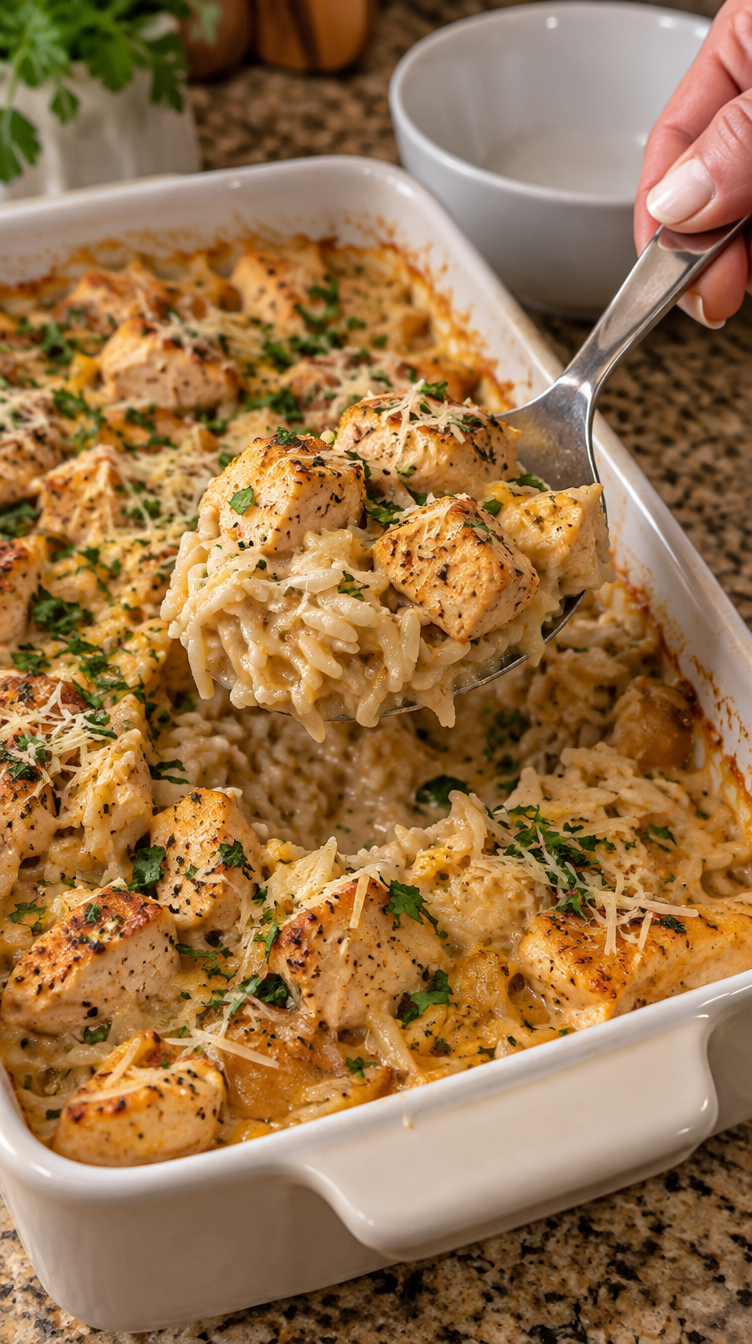
Garlic Butter Chicken Rice Bake – Creamy & Delicious!
Garlic Butter Chicken Rice is an easy one-dish dinner made with tender seasoned chicken, long-grain white rice, rich garlic butter, chicken broth, cream, and Parmesan cheese. Everything bakes together in a casserole dish, giving you fluffy, savory rice and juicy chicken with plenty of comforting homemade flavor.
This recipe is especially convenient for busy weeknights because you don’t need to cook the rice separately. The uncooked rice goes directly into the baking dish with the liquid ingredients, while seasoned chicken cooks over the top.
After baking, fresh parsley adds color and freshness to this creamy garlic chicken and rice casserole.
Why You’ll Love This Garlic Butter Chicken Rice
Chicken and rice is a classic dinner combination, and this version adds extra richness with garlic butter, cream, Parmesan, and Italian-inspired seasonings.
You’ll love this recipe because it is:
- Made in one casserole dish
- Rich and buttery
- Packed with garlic flavor
- Made with simple ingredients
- Creamy without requiring a separate sauce
- Easy enough for a weeknight
- Suitable for family dinners
- Easy to serve with vegetables
- Convenient for leftovers
Another advantage is that the rice absorbs flavor from the chicken broth, garlic, butter, seasonings, and chicken as everything cooks together.
Garlic Butter Chicken Rice Ingredients
You’ll need:
- 1 1/2 lbs boneless, skinless chicken breasts, cut into bite-sized pieces
- 1 1/2 cups uncooked long-grain white rice
- 3 cups chicken broth
- 4 tablespoons unsalted butter, melted
- 4 garlic cloves, minced
- 1 small onion, finely diced
- 1/2 cup heavy cream
- 1/2 cup grated Parmesan cheese
- 1 teaspoon garlic powder
- 1 teaspoon Italian seasoning
- 1/2 teaspoon onion powder
- 1/2 teaspoon smoked paprika
- Salt and black pepper, to taste
- Fresh parsley, for garnish
Understanding the Main Ingredients
Chicken Breast
Boneless, skinless chicken breasts make this casserole easy to eat and serve.
Cut the chicken into similarly sized bite-sized pieces so they cook at approximately the same rate.
The chicken needs to reach a safe internal temperature of 165°F (74°C).
Long-Grain White Rice
This recipe is designed around uncooked long-grain white rice.
Rice type matters because different varieties can require different amounts of liquid and cooking time.
If you substitute another type of rice, don’t assume it will behave exactly like long-grain white rice.
Chicken Broth
Chicken broth supplies most of the cooking liquid for the rice.
As the casserole bakes, the rice absorbs the broth along with flavors from the garlic, butter, onion, chicken, and seasonings.
Butter
Four tablespoons of melted unsalted butter create the rich garlic-butter character of the dish.
Using unsalted butter also gives you more control over the final seasoning.
Fresh Garlic
Four minced garlic cloves go directly into the liquid mixture.
The recipe also includes garlic powder on the chicken, giving you garlic flavor in more than one component.
Heavy Cream
Heavy cream adds richness and helps give the finished rice a creamy texture.
It works alongside the broth rather than replacing it.
Parmesan Cheese
Parmesan contributes savory, salty flavor.
It is sprinkled over the chicken and rice before baking.
Onion
Finely diced onion is spread over the bottom of the casserole with the rice.
Cut it relatively small so it distributes evenly throughout the dish.
Italian Seasoning
Italian seasoning complements the garlic, Parmesan, chicken, and butter.
Smoked Paprika
Smoked paprika adds color and a subtle smoky element to the chicken seasoning.
How to Make Garlic Butter Chicken Rice
Step 1: Preheat the Oven
Preheat your oven to 375°F (190°C).
Lightly grease a 9×13-inch baking dish.
A properly preheated oven helps the rice begin cooking consistently once the casserole goes in.
Step 2: Add the Rice and Onion
Spread 1 1/2 cups uncooked long-grain white rice evenly across the bottom of the prepared baking dish.
Scatter the finely diced onion over the rice.
Try to keep the layer relatively even so the rice cooks consistently.
Step 3: Add the Garlic Butter Liquid
Pour in:
- 3 cups chicken broth
- 1/2 cup heavy cream
- 4 tablespoons melted butter
- 4 minced garlic cloves
Stir gently so the rice, onion, and liquids are evenly distributed.
Make sure there aren’t large piles of dry rice sitting above the liquid.
Step 4: Season the Chicken
Place the bite-sized chicken pieces in a bowl.
Season with:
- 1 teaspoon garlic powder
- 1 teaspoon Italian seasoning
- 1/2 teaspoon onion powder
- 1/2 teaspoon smoked paprika
- Salt
- Black pepper
Toss until the seasoning is distributed over the chicken.
Step 5: Assemble the Casserole
Arrange the seasoned chicken pieces evenly over the rice mixture.
Avoid concentrating all the chicken in one part of the baking dish.
Sprinkle the grated Parmesan cheese over the top.
Step 6: Cover and Bake
Cover the baking dish tightly with aluminum foil.
This step is important because trapping steam helps the uncooked rice absorb liquid and become tender.
Bake for approximately 40–50 minutes.
Check that the rice is tender and that the chicken has reached 165°F (74°C) internally.
Use a food thermometer to check the thickest pieces of chicken.
Step 7: Check the Rice
Remove the foil carefully because hot steam may escape.
Gently stir the casserole.
If the rice is tender but there is a little excess liquid, return the dish to the oven uncovered for another 5–10 minutes as needed.
If the rice still needs additional cooking and the casserole looks dry, add a small splash of hot broth before continuing to bake.
The exact cooking time can vary depending on the baking dish, oven, rice, and size of the chicken pieces.
Step 8: Rest and Serve
Remove the casserole from the oven once the chicken and rice are properly cooked.
Allow it to rest for approximately 5 minutes.
Garnish with fresh chopped parsley.
Serve warm.
How to Get Tender Rice and Juicy Chicken
Cooking raw rice and chicken together requires enough liquid, heat, and trapped steam.
One of the most important steps is covering the casserole tightly during the main baking period.
The foil traps steam inside the baking dish, helping the rice absorb the broth and cream.
Avoid repeatedly opening the oven and removing the foil during cooking. Every time the cover is removed, some of the trapped steam escapes.
Chicken size also matters.
Cut the chicken into reasonably uniform bite-sized pieces. Very large and very small pieces mixed together can cook at different rates.
The rice should also be spread evenly across the bottom rather than piled in one area.
At the end, check both components separately: the rice should be tender, and the chicken should reach a safe internal temperature of 165°F.
Tips for the Best Garlic Butter Chicken Rice
Use the Right Rice
Use uncooked long-grain white rice as specified.
Brown rice, instant rice, wild rice blends, and other varieties can require different cooking times and liquid ratios.
Cover the Dish Tightly
A tight foil cover is important during the first part of baking.
You want the steam to remain inside the casserole while the rice cooks.
Cut Chicken Into Similar Pieces
Uniform pieces cook more evenly.
This also makes the finished casserole easier to serve.
Spread the Rice Evenly
Don’t leave a thick mound of rice in one corner.
An even layer helps expose the rice to the cooking liquid consistently.
Don’t Forget the Resting Time
Allow the casserole to sit for approximately five minutes after baking.
The rice can continue settling and absorbing moisture during this short rest.
Check the Chicken With a Thermometer
Don’t rely only on color.
Use a food thermometer and confirm that the chicken reaches 165°F (74°C).
Adjust Liquid Carefully
If the rice still feels firm and most of the liquid has already been absorbed, the recipe allows you to add a splash of hot broth and continue cooking.
Add only what is needed rather than pouring in a large amount at once.
Common Mistakes to Avoid
Using the Wrong Type of Rice
This is one of the easiest ways to change the outcome of a baked rice casserole.
Different rice varieties don’t all use identical liquid ratios or cooking times.
Stick with long-grain white rice unless you have specifically adjusted the recipe for another variety.
Leaving the Casserole Uncovered
The main baking stage should be covered tightly.
Without the cover, moisture can evaporate too quickly before the rice becomes tender.
Cutting Chicken Unevenly
Very small pieces may cook much faster than large chunks.
Aim for similar bite-sized pieces.
Checking Too Frequently
Repeatedly removing the foil releases steam.
Let the casserole cook for most of the recommended time before checking it.
Adding Cold Liquid Late in Cooking
If the rice needs more liquid near the end, the recipe calls for a splash of hot broth.
This avoids dramatically cooling the casserole during the final cooking stage.
Overbaking the Chicken
Once the rice is tender and the chicken has safely reached 165°F, don’t continue baking unnecessarily.
If you’re only trying to reduce a little excess liquid, monitor the casserole closely during the uncovered finishing period.
Easy Garlic Butter Chicken Rice Variations
Add Broccoli
Broccoli pairs naturally with chicken, rice, garlic, and Parmesan.
Because vegetables can release moisture and have their own cooking requirements, consider how and when you add them rather than simply adding a large quantity.
Add Spinach
Spinach can add color and vegetables to the finished meal.
It can be incorporated toward the end so it wilts without requiring a long cooking time.
Add More Parmesan
If you enjoy a stronger Parmesan flavor, serve additional grated cheese at the table.
This allows each person to adjust their serving.
Add Red Pepper Flakes
A small amount of red pepper flakes can provide gentle heat that contrasts with the creamy rice.
Try Chicken Thighs
Boneless chicken thighs may be an alternative, but cooking characteristics can differ from chicken breast.
Whatever cut you choose, ensure the chicken is cooked safely.
Add Lemon at Serving
A small squeeze of fresh lemon can brighten the rich garlic-butter flavor.
Adding it when serving also allows each person to decide how much acidity they prefer.
What to Serve With Garlic Butter Chicken Rice
Because the casserole already includes chicken and rice, simple vegetable sides are a natural choice.
Try it with:
- Roasted broccoli
- Green beans
- Garden salad
- Roasted asparagus
- Steamed vegetables
- Brussels sprouts
- Fresh tomatoes
A crisp salad can be particularly useful for balancing the creamy, buttery character of the main dish.
You don’t need another heavy starch because the casserole already contains a generous amount of rice.
How to Store Garlic Butter Chicken Rice
Cooked chicken and rice require appropriate handling during storage.
The recipe calls for refrigerating leftovers in an airtight container within 2 hours and keeping them refrigerated for 3–4 days.
Divide large quantities into suitable containers if necessary so leftovers can cool and be refrigerated appropriately.
For additional guidance about storing leftovers safely, follow current USDA food-safety recommendations.
Don’t leave the casserole sitting at room temperature for extended periods.
How to Reheat Garlic Butter Chicken Rice
Reheat leftovers until thoroughly hot.
The recipe calls for reheating to 165°F (74°C).
Because refrigerated rice can become drier as it sits, you can add a small splash of chicken broth before reheating if needed.
Covering the portion while reheating can also help retain moisture, depending on your reheating method.
Avoid repeatedly reheating the entire batch when you only need one serving. Reheat the portion you plan to eat.
Garlic Butter Chicken Rice FAQs
What is Garlic Butter Chicken Rice?
Garlic Butter Chicken Rice is a baked casserole made with bite-sized chicken breast, uncooked long-grain rice, chicken broth, garlic, butter, cream, Parmesan, onion, and seasonings.
The chicken and rice cook together in one baking dish.
Can I put uncooked rice directly in the casserole?
Yes.
This recipe is specifically designed to use uncooked long-grain white rice.
The rice cooks in chicken broth, cream, butter, and other ingredients while the casserole is tightly covered.
Do I need to cook the chicken first?
No.
The recipe uses raw, bite-sized chicken pieces that cook in the oven.
Always verify that the chicken reaches 165°F (74°C) before serving.
Why is my rice still hard?
Several factors can affect baked rice, including insufficient liquid, escaped steam, rice variety, oven performance, and baking time.
If the chicken is cooked but the rice remains firm and the casserole is dry, add a small splash of hot broth, cover again if necessary, and continue cooking until the rice is tender.
Why should I cover chicken and rice while baking?
Covering helps trap steam and moisture inside the baking dish.
That moisture is important for cooking the uncooked rice.
Can I use brown rice instead?
Not as a direct one-to-one substitution without adjustments.
Brown rice generally has different cooking requirements from long-grain white rice, so changing the rice may require changes to the liquid and baking time.
Can I make Garlic Butter Chicken Rice without heavy cream?
Removing the heavy cream changes the liquid balance and creamy texture of the recipe.
If you substitute it, expect the finished casserole to differ from the original.
Can I add vegetables?
Yes.
Broccoli, spinach, and other suitable vegetables can complement the chicken and rice.
However, vegetables vary in water content and cooking time, so consider when they should be added.
How do I know when the chicken is done?
Use a food thermometer.
Chicken should reach a safe internal temperature of 165°F (74°C).
Check thicker pieces rather than relying only on appearance.
How long can I keep leftovers?
The recipe recommends refrigerating leftovers in an airtight container for 3–4 days, with leftovers refrigerated within two hours.
Follow appropriate food-safety practices and discard food if its safety is uncertain.
Conclusion
Garlic Butter Chicken Rice is a simple way to turn chicken, uncooked rice, broth, garlic, butter, cream, and Parmesan into a comforting one-dish family dinner.
The key to getting good results is using the specified long-grain white rice, spreading it evenly, keeping the casserole tightly covered during the main baking stage, and checking that both the rice and chicken are fully cooked before serving.
Once everything is tender, a short uncovered finish can help absorb excess liquid, while fresh parsley adds a simple finishing touch.
Serve this creamy garlic butter chicken and rice casserole warm with a salad or vegetables for an easy weeknight meal.